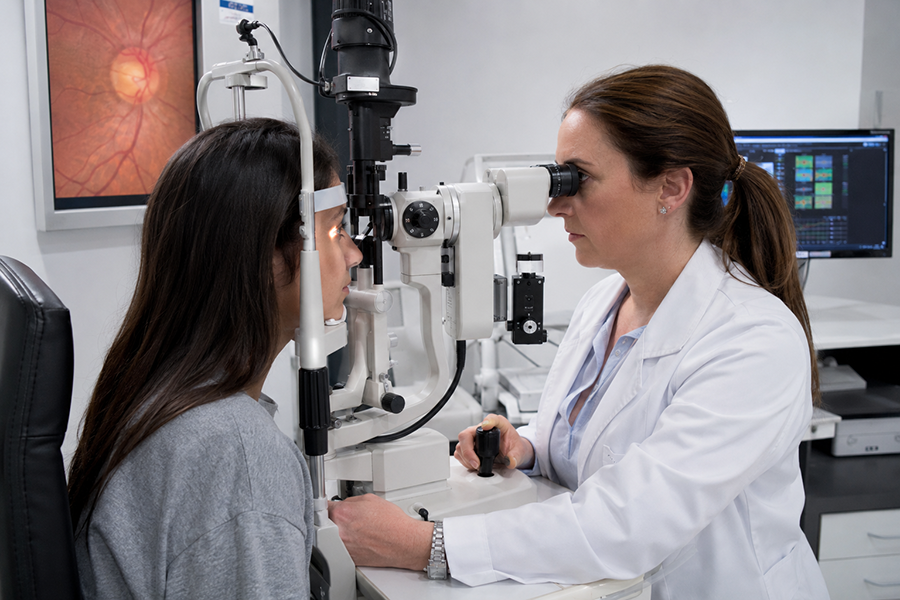
Summer is the time of year when we put our eyes under the most strain…
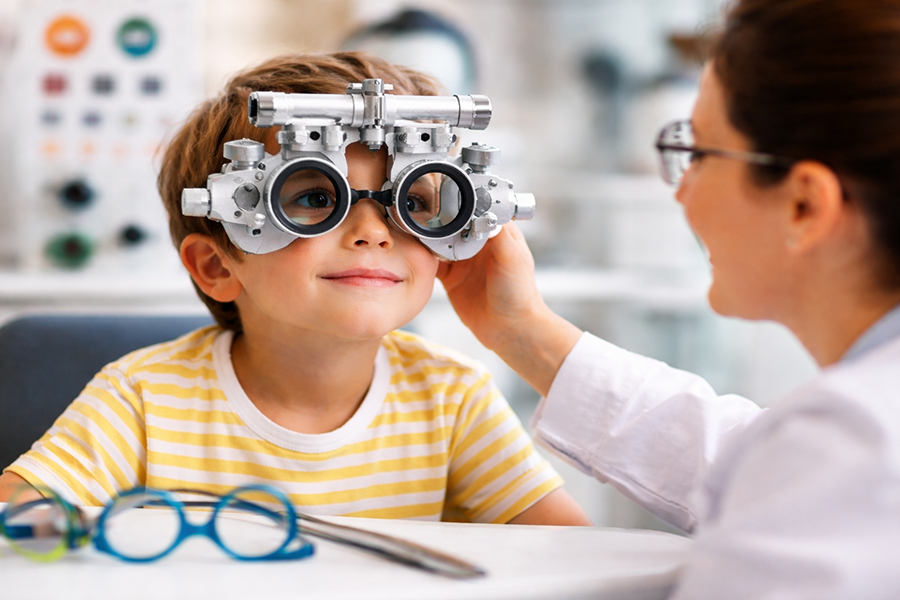
Children’s eye health: key to optimal development
A child’s overall development is closely linked to the proper development of their visual system. Vision not only plays a part in the ability to perceive the environment, but also plays a fundamental role in learning, coordination and cognitive development. Despite this, it is estimated that approximately one in five children has some form of visual impairment.
Among the most common conditions are amblyopia (lazy eye), strabismus and refractive errors such as myopia, astigmatism or hyperopia. All these conditions have an excellent prognosis if detected and treated early.
The importance of early detection
Visual ability develops during childhood, so any untreated condition can have permanent consequences. As specialists point out, what is not learnt to see in the early stages of life is unlikely to be recovered in adulthood.
For this reason, prevention and early diagnosis are essential. Eye examinations at an early age allow potential problems to be identified before they affect a child’s academic performance or quality of life.
Looking after visual health from childhood is, ultimately, a direct investment in future well-being and development.
The most common eye conditions in childhood
There are certain conditions that are more prevalent during childhood:
- Refractive errors (short-sightedness, astigmatism and long-sightedness)
If not properly corrected, these can lead to difficulty focusing, eye strain, headaches and even poor academic performance.
- Amblyopia (lazy eye)
This is a reduction in visual acuity in one or both eyes with no apparent organic cause. Treatment is highly effective if started early, particularly before the age of 4–5.
- Strabismus
Eye misalignment can affect both vision and depth perception. Early detection allows for effective treatment and, in many cases, successful correction.
- Structural eye abnormalities
These include conditions such as congenital cataracts, ptosis (drooping eyelid) or corneal opacities, which require specialist assessment and, in some cases, early surgical treatment.
Commitment to children’s eye health
At INOF, paediatric ophthalmology is approached from a holistic perspective, combining advanced diagnostic technology with personalised care tailored to each stage of the child’s development.
The aim is to detect any visual abnormalities at an early stage and offer the most appropriate treatment, thereby ensuring proper visual development and a better quality of life in the long term.
Temas relacionados