
In summer, we tend to remember to protect our skin, but our eyes also suffer…
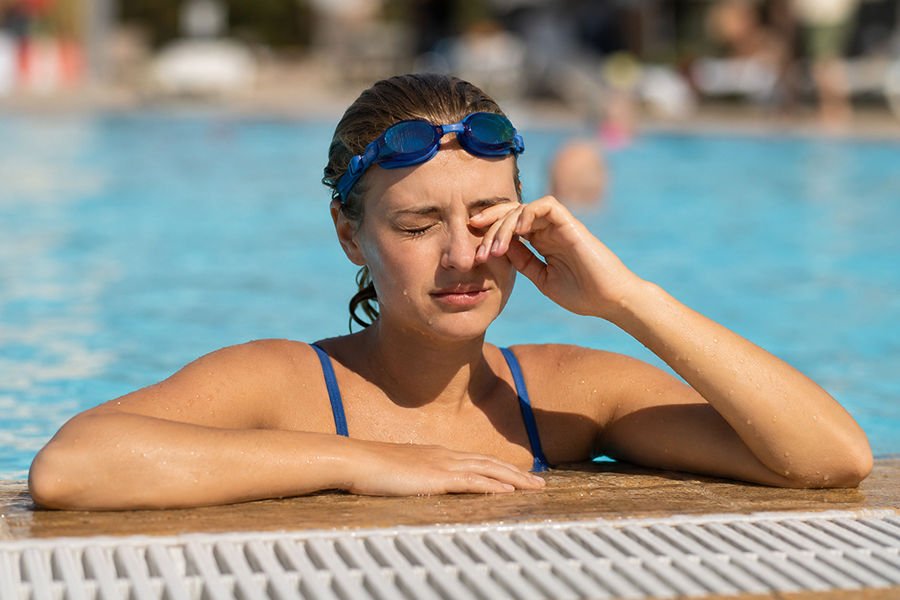
Swimming pools, the sea and contact lenses: the trio your eyes won’t forgive
Water takes centre stage in summer, and is also the cause of much of the eye discomfort experienced at this time of year. Chlorine in swimming pools irritates the surface of the eye and washes away the tear film that protects it, leaving the eye red and with a gritty sensation; sea water adds the effect of salt; and in crowded waters, there is an increase in infectious conjunctivitis, which is highly contagious in swimming environments.
The most important advice is for contact lens wearers: do not swim whilst wearing them – not in the pool, the sea or the shower. Contact lenses act like a sponge, trapping microorganisms present in the water, some of which can cause painful corneal infections that require lengthy treatment and may even compromise your vision. If you don’t want to compromise on clear vision underwater, prescription swimming goggles are an excellent alternative; and if you accidentally swim whilst wearing contact lenses, remove them as soon as possible, dispose of them if they are daily disposables, and never rinse them with tap water.
For everyone else, a well-fitting pair of swimming goggles prevents most irritation, and preservative-free artificial tears help restore the surface of the eye after swimming and combat the dryness caused by air conditioning and wind.
When should you seek medical advice? If the redness lasts for more than 48 hours, or if there is discharge, pain or sensitivity to light, see your GP or ophthalmologist as soon as possible — and if you are on holiday and cannot get hold of them, do not wait until you return: distinguishing between simple irritation and an infection requires professional assessment, and in cases of severe pain or loss of vision, you should go to the A&E department at the nearest hospital.
Temas relacionados