Myopia in children is increasing at a rate that is causing concern among specialists. Estimates…

The best remedy for childhood short-sightedness this summer: playing outdoors
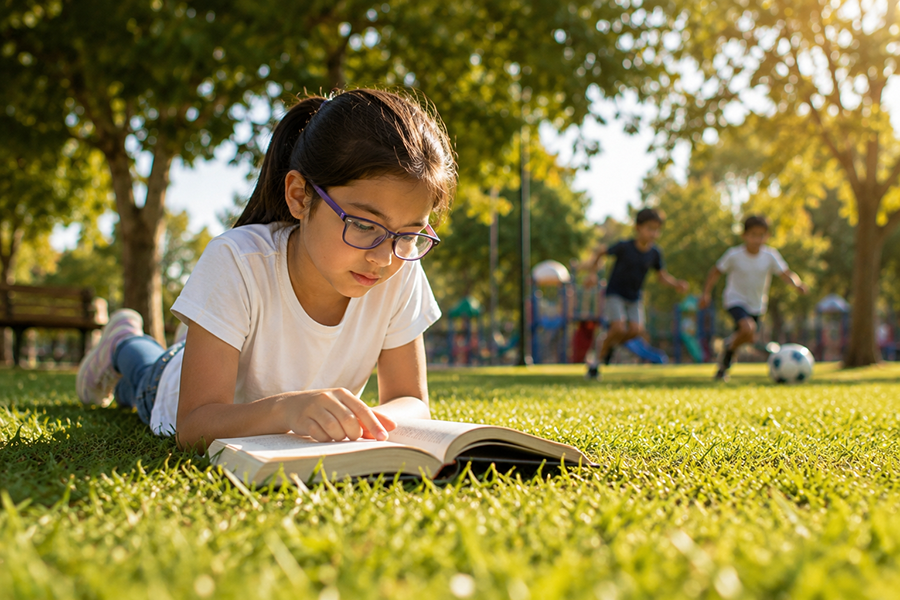
Myopia is on the rise worldwide at a rate that is causing concern amongst ophthalmologists: it is estimated that by 2050, half the world’s population will be short-sighted. However, research in recent years has confirmed a protective factor that is as powerful as it is accessible: natural light. Every hour of outdoor play counts, and summer is the perfect time to start.
Why natural light offers protection
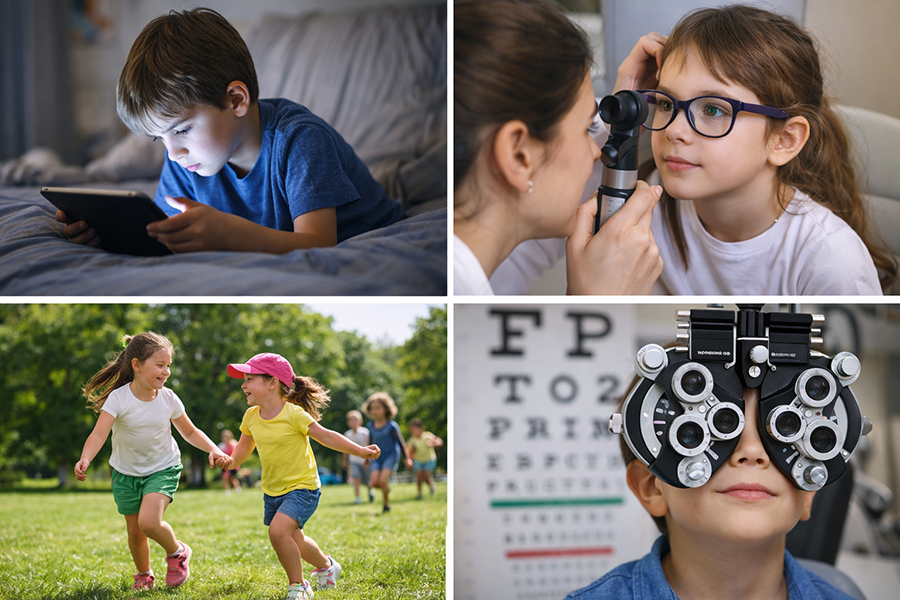
More and more paediatric ophthalmologists are ‘prescribing’ that their patients spend more time outdoors, because studies show that children who play outside for longer periods are less likely to develop short-sightedness and, if they are already short-sighted, their condition progresses more slowly. The intensity of natural light — dozens of times greater than that found indoors — stimulates mechanisms in the retina that regulate the growth of the eye, slowing down the excessive elongation that causes myopia.
The general recommendation is for at least 90 minutes to 2 hours of outdoor activity every day, always with adequate sun protection: a cap and approved sunglasses.
The other side of the coin: close-up work
Excessive hours spent on near vision—screens, but also reading and homework at a distance of less than 30 cm—are associated with a faster progression of myopia. It is not a question of banning these activities, but of striking a balance: alternating close-up tasks with visual breaks, maintaining a good reading distance, and making the most of the summer to swap screen time for time spent at the swimming pool, in the park, on the beach or playing sport.
How to detect myopia early
Short-sightedness usually develops between the ages of 6 and 12, and children rarely complain: they do not realise that they could see better. Warning signs for parents:
- They sit very close to the television, tablet or books.
- They squint or frown when looking at things from a distance.
- They complain of headaches or struggle to see the blackboard (leading to a drop in academic performance).
- They rub their eyes frequently or avoid activities that require looking at things from a distance.
Today, myopia can be slowed down
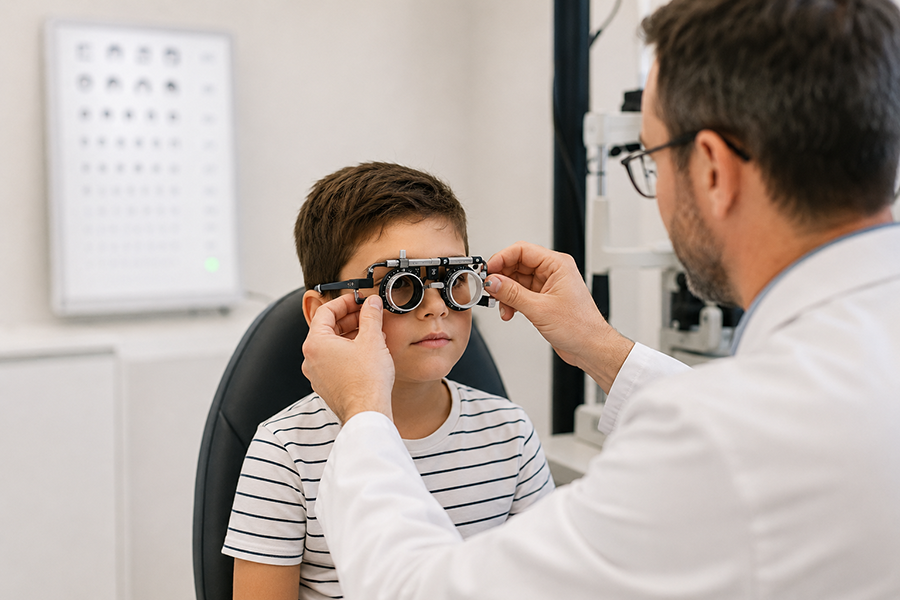
Detecting myopia early no longer just means prescribing glasses: it means being able to take action. There are proven treatments for myopia control — peripheral defocus lenses, specialised contact lenses, orthokeratology and low-dose atropine — which can slow its progression during childhood and reduce the future risk of complications associated with high myopia, such as retinal detachment or myopic maculopathy.
At INOF, the paediatric ophthalmology unit and the contact lens unit work in close collaboration to design the most appropriate myopia control strategy for each child, with personalised monitoring of their progress.
Book your appointment at INOF
Summer is the ideal time for your children’s eye check-up, without the rush of the school term and with plenty of time to start myopia control treatment before September.
www.inof.es · 933 933 156 · Teknon Medical Centre, Consultorios Vilana 12, Barcelona
Temas relacionados