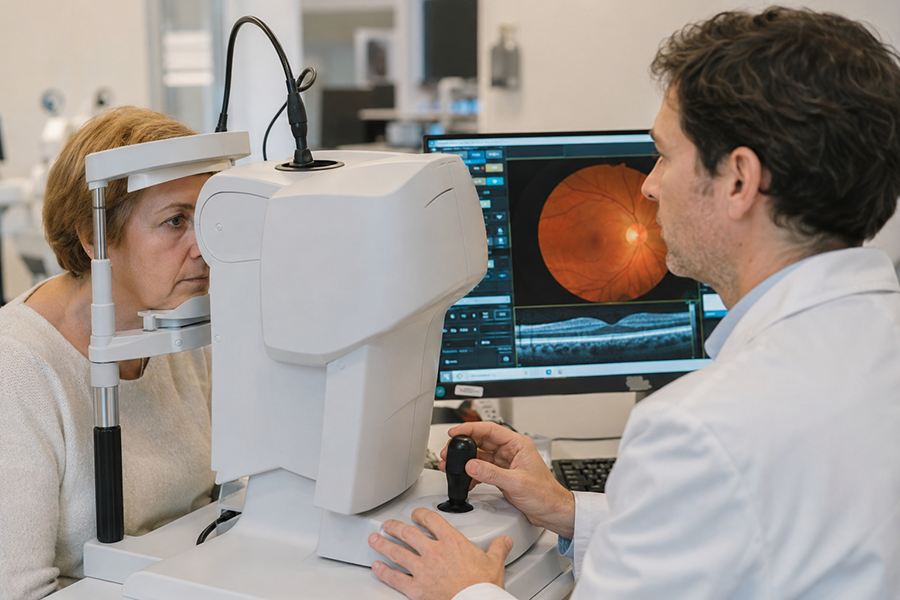
Glaucoma, age-related macular degeneration (AMD) and diabetic retinopathy all have something in common: they can…
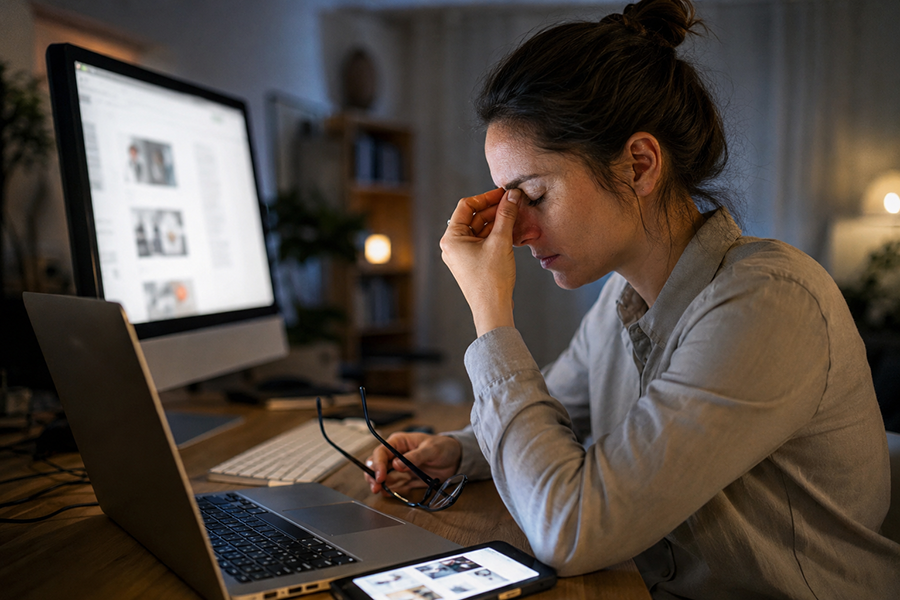
Digital eye strain: why you don’t need blue-light glasses (and what really works)
We spend an average of more than seven hours a day in front of screens, and on vacation—between our cell phones, TV shows, and video games—that number doesn’t go down; it just shifts to different devices. Digital eye strain has become one of the most common reasons for visiting an ophthalmologist. The good news: it can be relieved with simple habits, not miracle products.
What is digital eye strain?
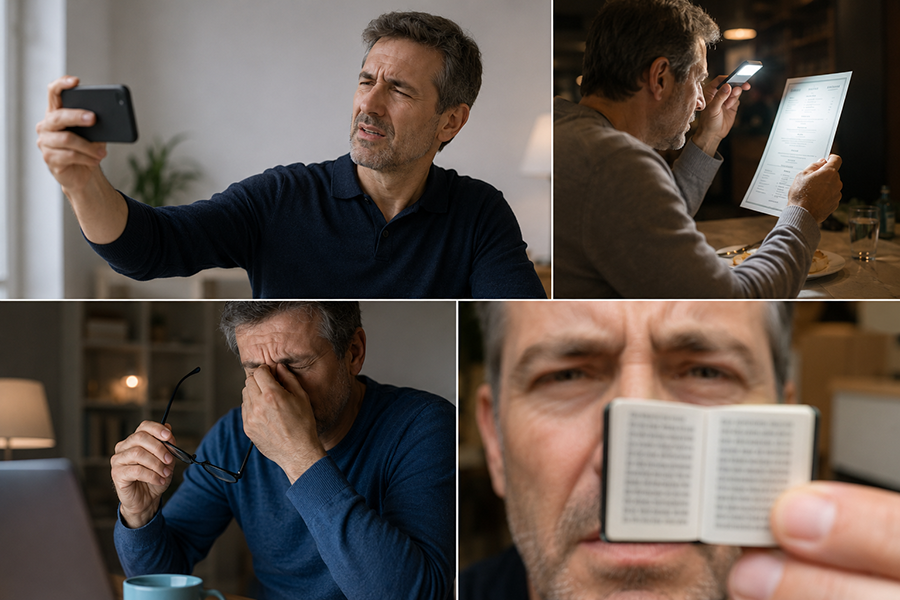
Also known as computer vision syndrome, it encompasses the symptoms that arise after prolonged screen use: dry, itchy eyes; intermittent blurred vision; difficulty focusing when changing viewing distances; headaches; and discomfort in the neck and shoulders. It’s estimated that the vast majority of people who spend more than three hours a day in front of screens experience at least one of these symptoms.
The main cause is not the light emitted by the screen, but how we use it: when staring at a screen, we blink up to three times less frequently, tears evaporate, and the focusing muscle works nonstop at close range for hours.
Blue Light Filters: Under Scrutiny
The most recent recommendations from leading ophthalmological societies are unanimous: there is no need to invest in blue light glasses or filters to combat eye strain, because scientific evidence has not shown that they reduce symptoms. The amount of blue light emitted by a screen is a tiny fraction of what we naturally receive from the sun.
Where screen light does have an impact is on sleep: using screens late at night can make it harder to fall asleep. The solution, once again, is to develop good habits (reducing screen time before bed or turning on night mode), not to buy special glasses.
What Actually Works
- The 20-20-20 Rule: Every 20 minutes, look away from the screen and focus on something about 6 meters away for 20 seconds. This gives your focusing muscles the break they need.
- Conscious blinking and artificial tears: If you notice dryness, preservative-free artificial tears soothe and protect the surface of your eyes.
- Ergonomics: Position the screen slightly below eye level, 50–70 cm away, with ambient lighting that minimizes glare.
- Less screen time at night: this improves both eye comfort and sleep quality.
- Up-to-date prescription: poorly corrected nearsightedness, farsightedness, astigmatism, or presbyopia can significantly increase eye strain. Starting around age 40–45, early-stage presbyopia is often the cause of “tired eyes.”
When there’s more to it
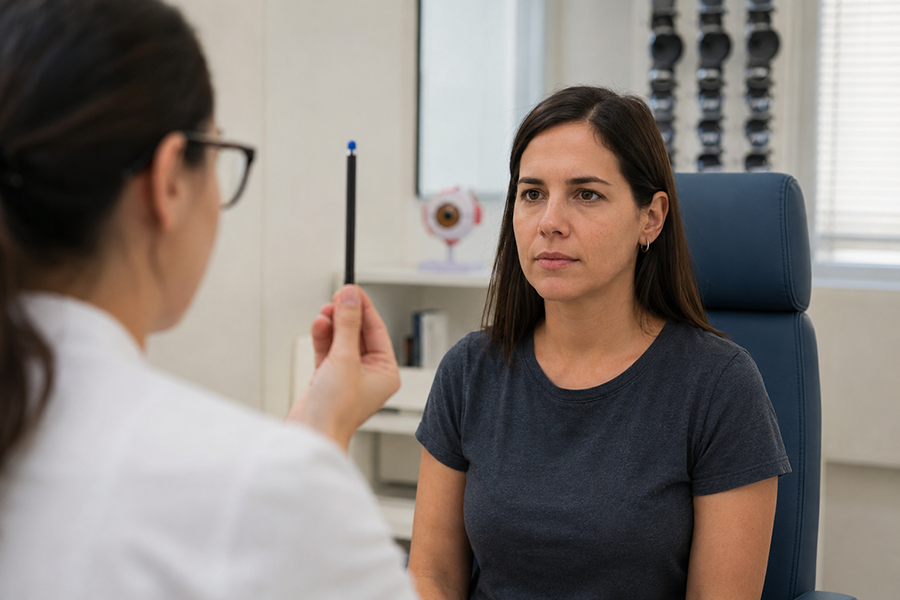
If symptoms persist despite these habits, it’s important to rule out other causes: dry eye, uncorrected refractive errors, or—very common and often underdiagnosed—a binocular vision problem, such as convergence insufficiency, in which the two eyes do not coordinate their focusing efforts well at close range. At INOF, we are a leading center for binocular vision and have a dedicated unit for its diagnosis and treatment in both children and adults.
Schedule your appointment at INOF
If screen time is taking a toll on you, a comprehensive examination of your refraction, ocular surface, and binocular vision will identify the true cause of your eye strain.
www.inof.es · 933 933 156 · Teknon Medical Center, Vilana 12 Clinics, Barcelona
Temas relacionados