We spend an average of more than seven hours a day in front of screens,…
Presbyopia: advanced solutions to restore visual quality
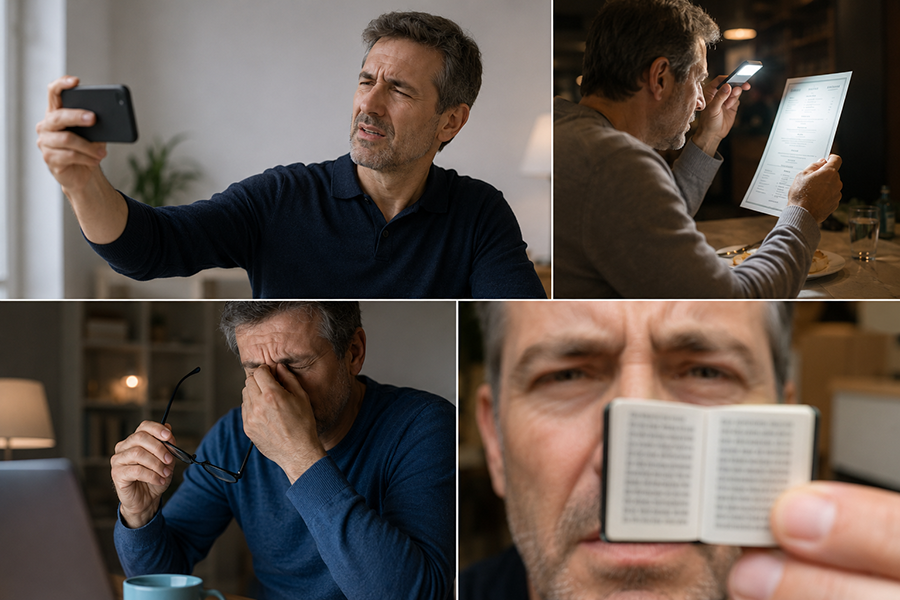
Presbyopia, or age-related long-sightedness, is a vision condition associated with ageing that manifests as a progressive loss of the ability to focus on close-up objects. This change directly affects everyday activities such as reading, using digital devices or working at close range, and has a significant impact on quality of life.
It usually begins to appear from the age of 40–45 and is linked to a decrease in the elasticity of the lens, a key structure in the eye’s accommodation mechanism. Although this is a natural physiological process, each patient experiences it differently, both in terms of when it begins and how it progresses.
Beyond glasses: a modern approach to presbyopia
Traditionally, presbyopia has been corrected using reading glasses, progressive lenses or multifocal contact lenses. However, current advances in ophthalmology allow us to go beyond these conventional solutions, offering alternatives that reduce dependence on external corrections.
Innovation in refractive surgery
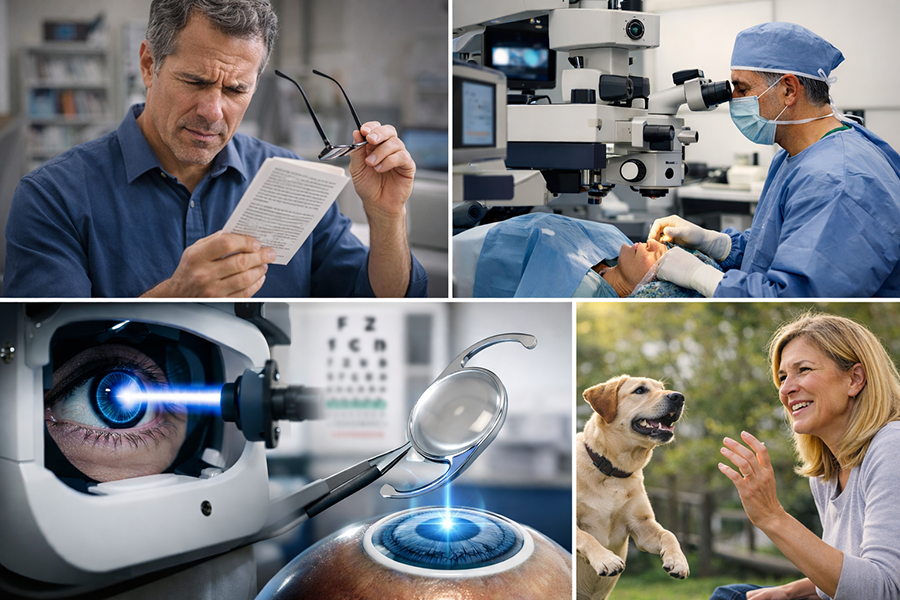
Advances in refractive surgery have led to the development of specific techniques for treating presbyopia, with increasingly precise and personalised results. These surgical solutions form part of a comprehensive approach to visual health, aimed at improving patients’ independence and their quality of vision at all distances.
High-precision, personalised treatments
The surgical approach to presbyopia is not standardised, but entirely individualised. The choice of the most appropriate technique is based on a comprehensive assessment that takes into account:
- The patient’s age and lifestyle
The prescription for distance vision
The anatomy and functional status of the eye
Visual expectations
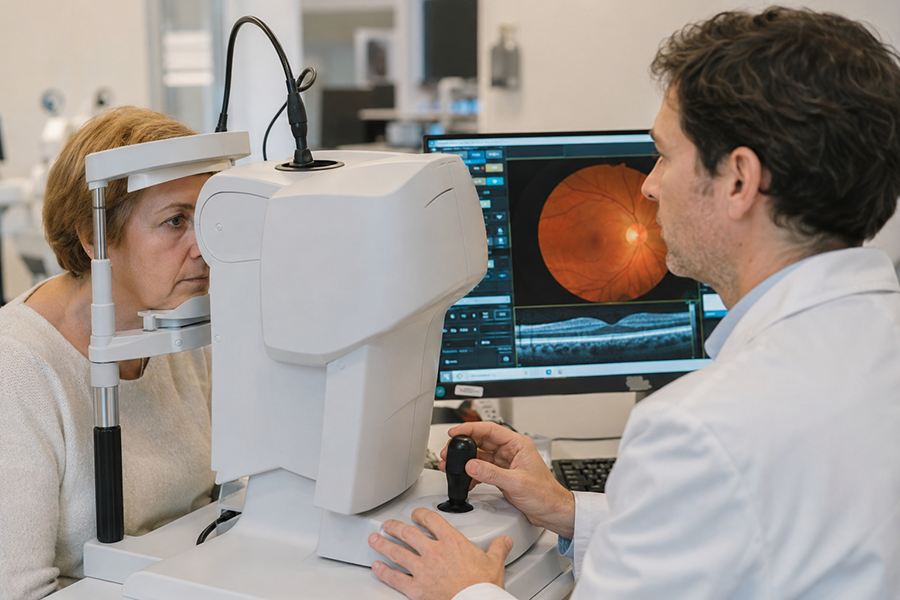
Based on this assessment, a bespoke treatment plan is designed, utilising advanced diagnostic technology and high-precision clinical protocols.
Commitment to visual excellence
In specialist centres such as INOF, the treatment of presbyopia is approached from a holistic perspective, combining clinical expertise, technological innovation and personalised care. The aim is to offer effective, safe solutions tailored to each patient, enabling them to regain functional vision and reduce their dependence on glasses in daily life.
Temas relacionados